
Warehouse roofing is different from residential roofing because large facilities need stronger performance, better energy control, and long-term protection over wide roof areas. A warehouse roof must protect inventory, equipment, staff, loading zones, machinery, and daily operations.
Many property owners ask, “what is roofing materials selection really based on?” For warehouses, the answer includes climate, roof structure, foot traffic, drainage, insulation, budget, and building use.
The best roofing materials for warehouses include metal roofing, modified bitumen, TPO, PVC, and liquid applied roofing systems. Each option has different strengths. Some are better for energy efficiency, while others perform better in chemical exposure, heavy rain, or high-traffic environments.
Choosing the right material helps improve roof durability, reduce maintenance costs, and protect the facility’s long-term value.
Why Warehouse Roofing Material Matters in Florida
Florida warehouses face intense heat, high humidity, heavy rain, hurricane-season winds, and strong UV exposure. These conditions make roofing material selection extremely important.
A poor roofing choice can lead to leaks, trapped moisture, high cooling costs, membrane damage, mold concerns, and early roof failure. For large facilities, even a small roof problem can affect inventory, equipment, employees, and business operations.
Warehouse roof design must consider drainage, insulation, wind uplift, roof traffic, and energy performance. In Florida, reflective and waterproof materials are especially valuable because they help control heat and moisture.
Flat roofing materials for warehouses are common because many large facilities have low-slope roof structures. These roofs need membranes or systems that can manage slow water movement, large surface areas, and rooftop equipment.
The right warehouse roofing material can improve operational efficiency. A reflective roof may reduce heat absorption, while a durable membrane can limit repair needs. Over time, the correct system supports better comfort, lower maintenance, and stronger return on investment.
What Are the Most Common Warehouse Roofing Materials?
The most common warehouse roofing materials include metal roofing, modified bitumen, TPO, PVC, and liquid applied roofing systems. These materials are used because they can cover large roof areas and handle commercial demands.
Warehouse roof types are usually flat, low-slope, or slightly sloped. Flat and low-slope roofs often use membrane systems, coatings, or asphalt-based materials. Sloped warehouse roofs may use metal roofing panels.
Metal systems are valued for strength. TPO and PVC are popular single-ply membranes. Modified bitumen offers layered waterproofing. Liquid applied systems are often used for restoration and waterproofing upgrades.
1. Metal Roofing
Metal roofing is one of the strongest options for warehouses and large facilities. It is commonly used on sloped warehouse roof structures, industrial buildings, distribution centers, agricultural buildings, and manufacturing facilities.
Metal roofing materials for warehouses can handle large roof spans, strong sun exposure, rain, and wind when installed correctly. They are also known for long service life and strong structural performance.
Advantages
Metal roofing offers durability, fire resistance, and long-term value. It can withstand harsh weather better than many lightweight systems when properly designed.
For Florida warehouses, reflective metal panels or coated metal systems may help reduce heat absorption. This can support better indoor temperature control, especially in facilities without heavy insulation.
Metal roofs can also be easier to maintain than some systems. Loose fasteners, seams, coatings, and flashing should still be checked regularly, but the material itself is strong and reliable.
Common Metal Types
Common metal roofing materials include steel, aluminum, Galvalume, and zinc. Steel is strong and widely used for industrial roofing. Aluminum is lightweight and naturally resistant to corrosion.
Galvalume combines steel with an aluminum-zinc coating, making it popular for commercial and industrial roofs. Zinc is durable and long-lasting, but it is often more expensive.
The best metal type depends on budget, building use, coastal exposure, wind requirements, and maintenance expectations.
Best For
Metal roofing is best for large industrial warehouses, distribution centers, manufacturing buildings, and high-traffic facilities with sloped roof structures.
It is also useful where long-term durability matters more than the lowest upfront price. Facilities with large roof surfaces may benefit from metal’s strength and potential energy efficiency.
However, metal roofing must be installed with proper fasteners, coatings, underlayment, insulation, and flashing. Poor installation can lead to leaks, corrosion, and noise issues.
2. Modified Bitumen Roofing
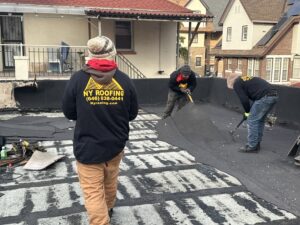
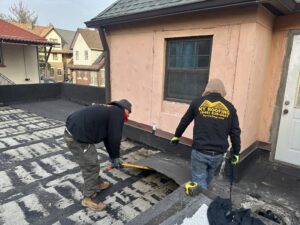
Modified bitumen is an asphalt-based flat roofing system used on commercial buildings, warehouses, and large facilities. It is known for durability, waterproofing, and puncture resistance.
This system is often installed in rolls and may include multiple layers. It can be torch-applied, cold-applied, self-adhered, or installed with hot asphalt depending on the project and product.
Advantages
Modified bitumen provides strong waterproofing and multi-layer protection. This makes it one of the practical flat roofing materials for warehouses that need durability and leak resistance.
It can handle moderate foot traffic better than some thinner membrane systems when properly surfaced. This is useful for facilities with rooftop HVAC units, maintenance crews, or service access.
Modified bitumen can also be repaired with compatible materials when damage is limited. Its layered design helps protect against punctures, weather exposure, and surface wear.
Drawbacks
Modified bitumen may absorb more heat than reflective systems unless it has a coated or reflective surface. In Florida, this can affect indoor temperature and cooling demand.
Installation can also be more complex than some single-ply membranes. Torch-applied systems require safety precautions, trained installers, and proper jobsite controls.
If seams, flashing, or drainage details are poorly installed, leaks can still occur. Like all flat roofing materials, modified bitumen depends on skilled installation and regular maintenance.
Best For
Modified bitumen is best for warehouses with moderate foot traffic, rooftop equipment, and a need for strong puncture resistance.
It can work well for facilities that want a proven asphalt-based system and good waterproofing performance. It may also be a good fit for flat or low-slope warehouse roof structures.
For Florida buildings, reflective coating may be considered to improve heat resistance and energy performance.
3. TPO Roofing
TPO roofing is a popular single-ply membrane used on commercial and warehouse roofs. It is known for reflectivity, energy efficiency, and cost-conscious performance.
TPO stands for thermoplastic polyolefin. It is installed in sheets and heat-welded at the seams to create a waterproof surface.
Advantages
TPO has a reflective surface that can reduce heat absorption. This is valuable for Florida warehouses because large roofs can collect intense solar heat throughout the day.
A reflective TPO roof may help reduce HVAC strain and improve indoor comfort. It is also lightweight, making it useful for many large facilities.
TPO is often considered a cost-effective solution because it can provide modern membrane performance at a competitive price. For many owners, it offers a balance of affordability, energy savings, and durability.
Drawbacks
TPO requires skilled installation. The seams must be heat-welded properly, and flashing details must be installed carefully.
Seam sensitivity can become a problem when installation quality is poor. Weak seams may allow water intrusion, especially on low-slope roofs with drainage issues.
Product quality can also vary by manufacturer, so building owners should work with contractors who use reliable materials and follow manufacturer guidelines.
Best For
TPO is best for budget-conscious warehouse projects that still need energy efficiency and flat roof performance.
It may be one of the smarter options when owners want cheap roofing materials for warehouses in terms of long-term savings, not just lowest upfront cost.
TPO is commonly used on distribution centers, offices attached to warehouses, retail storage buildings, and large facilities with open flat roof areas.
4. PVC Roofing
PVC roofing is another single-ply membrane used on warehouses and commercial facilities. It is known for chemical resistance, strong seams, and durability.
PVC stands for polyvinyl chloride. Like TPO, it is installed in sheets and heat-welded at the seams.
Advantages
PVC is highly valued for chemical resistance. This makes it useful for food storage warehouses, manufacturing facilities, chemical facilities, restaurants, and buildings with rooftop exhaust or chemical exposure.
PVC also offers strong seam strength when heat-welded correctly. The welded seams help create a watertight bond, which is important for flat warehouse roofs.
Its reflective surface can also support energy efficiency in Florida’s hot climate. This combination of waterproofing, reflectivity, and chemical resistance makes PVC a strong commercial roof option.
Drawbacks
PVC usually has a higher upfront cost than some other warehouse roofing systems. For owners focused only on initial price, this can be a concern.
It may also have limited flexibility in colder conditions compared with some other membranes, although this is less of an issue for most Florida warehouse projects.
PVC still requires professional installation. Poor seam welding, weak flashing, or improper surface preparation can reduce performance.
Best For
PVC is best for food storage warehouses, manufacturing buildings, chemical facilities, restaurants, and facilities exposed to grease, oils, or chemical residue.
It is also useful for large commercial roofs that need strong seam performance and long-term durability.
For warehouse owners who want a premium flat roof membrane, PVC is often worth considering.
5. Liquid Applied Roofing Systems
Liquid applied roofing systems are coatings or fluid-applied membranes used to restore, waterproof, and protect existing warehouse roofs.
These systems can be applied over certain metal roofs, single-ply membranes, modified bitumen, spray foam, and other approved surfaces.
Common Coating Types
Common coating types include silicone, acrylic, and polyurethane. Silicone is known for water resistance and ponding water performance. Acrylic is often reflective and cost-effective for roofs with good drainage.
Polyurethane coatings provide stronger impact and abrasion resistance. They may be useful on roofs with more foot traffic or mechanical equipment access.
The right coating depends on the existing roof surface, drainage, climate, and performance goals.
Advantages
Liquid applied roofing systems create seamless waterproofing over many roof surfaces. This can reduce leak points and extend warehouse roofing sheets lifespan when the existing roof is still in suitable condition.
These systems can also be cost-effective for restoration projects. Instead of removing the entire roof, a coating system may restore protection with less disruption.
For warehouses, minimal downtime is a major advantage. Coating projects can often be less disruptive than full replacement when the roof qualifies.
Drawbacks
Surface preparation is critical. The roof must be cleaned, repaired, dry, and compatible with the coating system. Applying coatings over wet insulation or failing materials can trap problems under the surface.
Liquid applied systems may also require periodic recoating. Their long-term performance depends on coating thickness, weather exposure, maintenance, and product type.
Not every roof is a good candidate. Severe structural damage, trapped moisture, or major membrane failure may require replacement instead of coating.
Best For
Liquid applied systems are best for roof restoration projects, leak prevention upgrades, and warehouses that need minimal downtime.
They are also useful when the existing roof is aging but still structurally sound. A professional inspection is needed to confirm whether restoration is appropriate.
For Florida warehouses, reflective coatings can help reduce heat absorption and extend roof performance.
Warehouse Roofing Materials Comparison Chart
This chart compares common warehouse roofing materials by lifespan potential, cost level, maintenance needs, and best use cases.
| Roofing Material | Lifespan Potential | Cost Level | Maintenance Needs | Best Use Cases |
| Metal Roofing | Long-term with proper care | Medium to high | Fasteners, seams, coating checks | Sloped warehouses, industrial buildings |
| Modified Bitumen | Strong with maintenance | Medium | Seam, flashing, and surface checks | Flat roofs needing puncture resistance |
| TPO Roofing | Good with skilled installation | Medium | Seam and flashing inspections | Energy-focused warehouses |
| PVC Roofing | Strong long-term performance | Medium to high | Seam, drain, and surface inspections | Chemical, food, and manufacturing facilities |
| Liquid Applied Systems | Depends on coating and roof condition | Low to medium | Recoating and surface checks | Restoration and minimal downtime projects |
This comparison helps identify the best roofing materials for warehouses quickly. However, a professional inspection is still needed before selecting a system.
How Do You Choose the Right Warehouse Roofing Material?
Choosing the right warehouse roofing material means looking at climate, roof slope, budget, temperature needs, roof traffic, warranty, and compliance.
A warehouse roof is a long-term investment. The best choice should protect the building, reduce operational issues, and support business continuity.
1. Climate Demands
Florida’s climate requires materials that handle heat, humidity, UV exposure, heavy rain, and storm winds.
Reflective materials such as TPO, PVC, coated metal, and roof coatings can help reduce heat absorption. Waterproof systems are also important because heavy rainfall can expose weak seams and drainage problems.
2. Roof Slope
Warehouse roof structure plays a major role in material selection. Sloped warehouse roofs may work well with metal roofing.
Flat or low-slope roofs usually need membranes, modified bitumen, built-up roofing, or liquid applied systems. These materials are designed to manage slow drainage and prevent leaks.
3. Budget and Long-Term Value
Initial cost matters, but lifecycle cost matters more. A cheap system may cost more over time if it requires frequent repairs or early replacement.
Warehouse owners should compare installation cost, maintenance cost, energy savings, repair needs, and expected lifespan. The best value is not always the lowest bid.
4. Operational Temperature Needs
Some warehouses store products that require temperature control. Cold storage facilities, food warehouses, pharmaceutical storage, and climate-controlled inventory spaces need stronger insulation and roof performance.
Reflective membranes and proper insulation can help stabilize indoor temperatures and reduce HVAC load.
5. Expected Roof Traffic
Warehouses often have rooftop equipment, vents, HVAC units, and service areas. Maintenance crews may need regular roof access.
If roof traffic is expected, choose a material that can handle movement or add walkway pads. GRP, coated metal, modified bitumen, and protected membrane systems may perform better in high-traffic areas.
6. Warranty and Compliance
Manufacturer warranties can add value, but they often depend on correct installation and maintenance. Building code compliance is also important, especially in Florida where wind resistance and storm performance matter.
Work with roofing professionals who understand warehouse roofing, local codes, wind requirements, and manufacturer specifications.
Maintenance: Extending Warehouse Roof Lifespan
Warehouse roof maintenance helps prevent leaks, reduce emergency repairs, and extend the life of the roofing system.
Large facilities need regular roof care because minor issues can spread across wide roof areas. Drainage problems, open seams, loose fasteners, membrane punctures, and flashing damage should be addressed early.
Essential Warehouse Roof Maintenance
Regular inspections should be scheduled at least seasonally and after major storms. Florida warehouses should also be checked before and after hurricane season.
Drainage is one of the most important maintenance areas. Clogged drains, gutters, and scuppers can cause ponding water, which increases roof stress.
Seams, flashing, roof edges, penetrations, and rooftop equipment areas should also be inspected. These are common leak points.
Preventing premature roof failure requires fast repairs. Small punctures, loose seams, minor corrosion, and coating wear should not be ignored. A maintenance plan can protect the roof investment and reduce long-term costs.
Conclusion: Choosing the Best Roofing Solution
The best roofing materials for warehouses depend on climate, roof structure, budget, building use, and long-term performance goals. In Florida, heat, humidity, storms, and heavy rain make material selection especially important.
Metal roofing is strong for sloped warehouse roofs. Modified bitumen offers durable waterproofing. TPO provides reflective energy-saving performance. PVC is excellent for chemical and food-related facilities. Liquid applied systems can restore aging roofs with minimal downtime
Need help choosing the right roofing materials for your warehouse or large facility? NY Roofing provides professional warehouse roof inspections, commercial roofing solutions, and customized roofing recommendations. Call (646) 838-0441 or visit 553 Prospect Ave., Brooklyn, NY 11215 to request your free warehouse roofing consultation and customized roofing quote today.
FAQs About Roofing Materials for Warehouses
What are the best roofing materials for warehouses?
The best roofing materials for warehouses include metal roofing, TPO, PVC, modified bitumen, and liquid applied roofing systems. The right choice depends on roof slope, climate, budget, chemical exposure, energy goals, roof traffic, and long-term maintenance needs.
Which roofing material lasts the longest for warehouses?
Metal roofing and high-quality membrane systems such as PVC can offer strong long-term performance when installed and maintained correctly. Lifespan depends on material quality, roof design, drainage, weather exposure, maintenance, and whether the roof system matches the building use.
Are metal roofs better than flat roofing systems?
Metal roofs are better for some sloped warehouse structures, while flat roofing systems are better for low-slope buildings. The best option depends on warehouse roof structure, drainage needs, budget, insulation, wind exposure, and operational requirements.
What is the most cost-effective warehouse roofing option?
TPO and liquid applied restoration systems are often cost-effective for many warehouses, depending on roof condition and project scope. However, the cheapest upfront option may not provide the best lifecycle value. Energy savings, maintenance, and lifespan should also be considered.
How often should warehouse roofs be maintained?
Warehouse roofs should usually be inspected at least seasonally and after major storms. In Florida, inspections before and after hurricane season are especially important. Maintenance should include drainage checks, seam inspections, flashing review, debris removal, and fast repair of small issues.