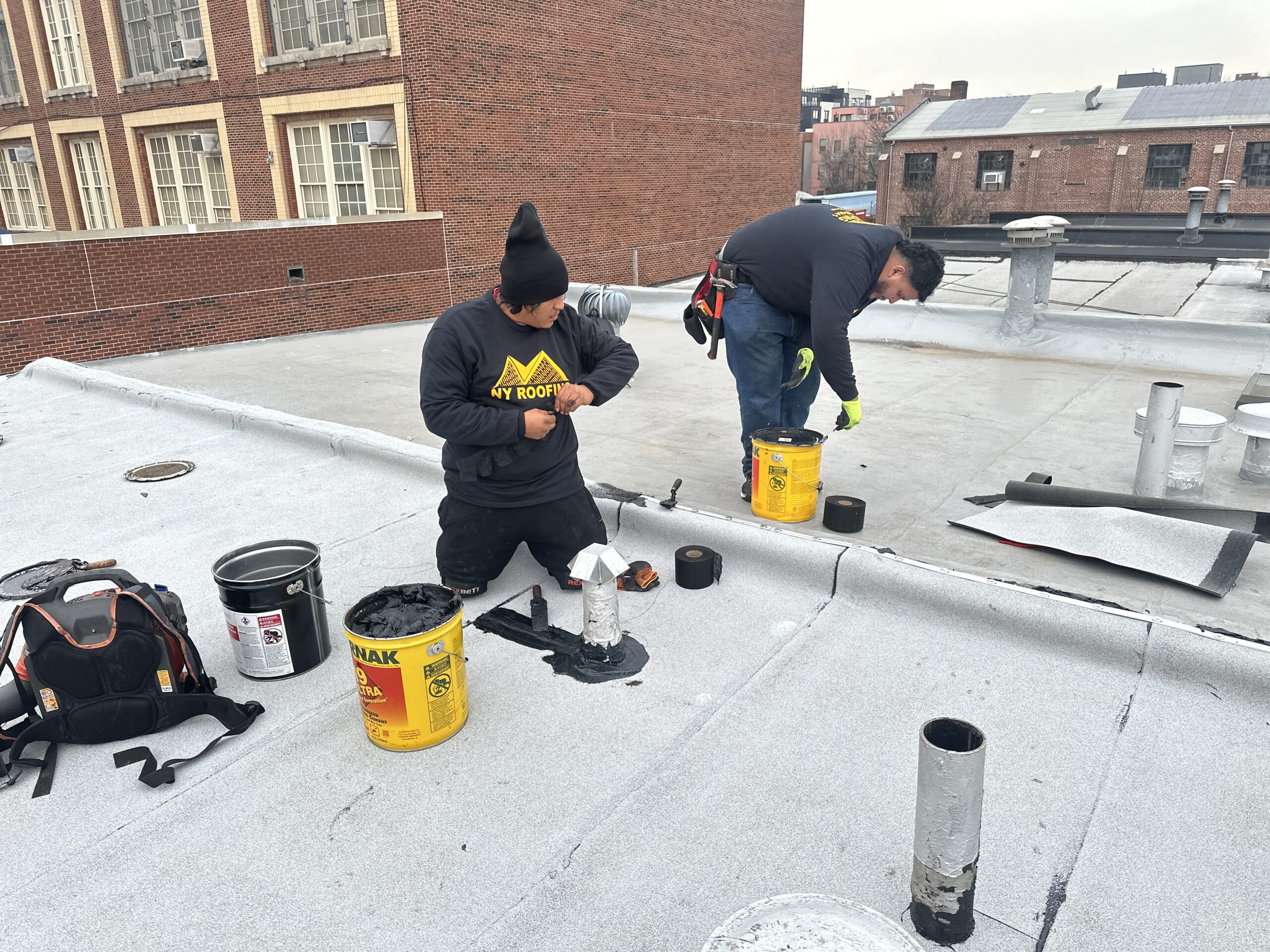
New York City’s skyline is dominated by flat and low-slope roofs, making roofing system selection a critical decision for property owners. Unlike sloped residential roofing systems, flat roofs in NYC must withstand constant exposure to harsh environmental stress while also supporting HVAC units, rooftop access, and drainage systems. Choosing the right material is not only about upfront cost but also long-term durability, energy efficiency, and maintenance requirements.
NYC weather further complicates roofing performance. Buildings face heavy snowfall in winter, intense UV exposure in summer, and repeated freeze-thaw cycles in between. These conditions often result in ponding water, membrane expansion and contraction, seam failures, and gradual structural stress over time.
Without the right roofing system, these issues can quickly escalate into expensive repairs or even full roof replacements. That’s why selecting a material designed for NYC’s demanding climate is essential for long-term building protection.
This guide provides a complete comparison of EPDM, TPO, and asphalt-based roofing systems used across NYC. You’ll learn how each system performs, their installation methods, advantages, limitations, costs, and ideal applications to help you choose the most suitable flat roofing solution.
Understanding Flat Roofing Systems in NYC
Flat roofing systems are essential in NYC because they maximize usable space while supporting modern urban infrastructure and building utilities.
Why Flat Roofs Are Standard in NYC Buildings
Flat roofs are widely used in NYC due to:
- Dense urban construction (space optimization)
- Brownstones and multi-family housing layouts
- Commercial buildings requiring rooftop equipment
- Easier expansion and maintenance access
They also allow property owners to utilize rooftop space for utilities, gardens, or solar installations.
Key Factors Affecting Flat Roof Performance in NYC
Several conditions influence roof durability:
- Weather extremes: Snow, rain, and UV cycles
- Drainage issues: Poor slope design leads to ponding water
- Building codes: NYC compliance requirements for insulation and fire safety
- Energy efficiency demands: Increasing need for reflective and insulated systems
Proper system selection reduces long-term repair costs and improves building efficiency.
EPDM Roofing in NYC (Rubber Roofing System Guide)
EPDM is one of the most widely used flat roofing systems in NYC due to its affordability, flexibility, and long-term performance in cold climates.
What Is EPDM Roofing? (Rubber Roofing Explained)
EPDM (Ethylene Propylene Diene Monomer) is a synthetic rubber membrane widely used in flat roofing systems. It is typically installed using:
- Fully adhered systems
- Mechanically fastened systems
- Ballasted systems
Its flexibility makes it ideal for NYC’s freeze-thaw climate.
EPDM Roofing Benefits for NYC Buildings
- Long lifespan (20–30+ years)
- Excellent cold-weather flexibility
- Low maintenance requirements
- Cost-effective for large flat roofs
EPDM is often chosen for older residential buildings and budget-focused projects.
EPDM Roofing Problems & Limitations
- Absorbs heat due to black surface
- Seam vulnerability over time
- Puncture risk in high foot-traffic areas
EPDM Installation Guide Overview
Installation involves:
- Surface preparation and cleaning
- Installing insulation layer
- Laying membrane sheets
- Sealing seams and edges
Before installation, property owners should review a proper Roof Inspection Checklist to identify structural issues.
EPDM Roofing Repairs & Maintenance
- Patch repairs for punctures
- Seam resealing
- Regular inspection (2x yearly recommended)
TPO Roofing in NYC (Thermoplastic Polyolefin Systems)
TPO roofing is a modern, energy-efficient solution widely used in commercial and residential buildings across NYC.
What Is TPO Roofing Membrane?
TPO is a single-ply reflective roofing system known for its heat-welded seam technology. It is widely used in modern NYC buildings.
Advantages of TPO Roofing for NYC Climate
- High energy efficiency (reflective white surface)
- Strong UV resistance
- Heat-welded seam durability
- Reduced cooling costs
TPO is often paired with modern insulation upgrades like Flat Roof Insulation systems.
TPO Roofing Problems & Installation Issues
- Quality varies between manufacturers
- Requires skilled installation
- Low-grade membranes may shrink over time
TPO Roofing Installation Process
- Insulation board installation
- Mechanical fastening or adhesive system
- Heat welding of seams
- Flashing and edge sealing
TPO Roofing Repairs & Maintenance
- Seam re-welding
- Puncture patching
- Periodic surface inspection
Built-Up Roofing (BUR) & Modified Bitumen Systems
BUR and modified bitumen systems are traditional asphalt-based roofing solutions known for strength and durability.
What Is Built-Up Roofing (BUR)?
BUR is a traditional roofing system made of multiple asphalt and felt layers, topped with gravel or smooth finish.
Modified Bitumen Roofing Explained
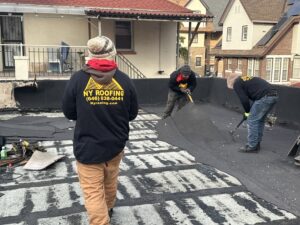
Modified bitumen is an asphalt-based reinforced membrane installed using:
- Torch-down method
- Cold-applied adhesives
- Self-adhered sheets
BUR vs Modified Bitumen Roofing Comparison
- BUR: multi-layer system with gravel finish
- Modified bitumen: flexible asphalt membrane
- BUR is heavier; mod-bit is easier to install
Advantages of Asphalt-Based Systems
- Extremely durable
- Strong waterproofing capability
- High resistance to foot traffic
Disadvantages of BUR & Modified Bitumen
- Heavy structural load
- Longer installation time
- Higher labor costs
Best Use Cases in NYC
- Older residential buildings
- Commercial rooftops
- High-traffic maintenance roofs
EPDM vs TPO vs Asphalt Roofing – Full Comparison Table
This section helps you directly compare cost, performance, and durability across all major flat roofing systems used in NYC.
Cost Comparison in NYC
- EPDM: Most affordable
- TPO: Mid-range pricing
- BUR/Mod Bit: Higher labor cost
Lifespan & Durability
- EPDM: 20–30+ years flexibility
- TPO: 15–25 years moderate durability
- Asphalt: Long-lasting but maintenance-heavy
Energy Efficiency Comparison
- TPO: Best reflectivity
- EPDM: Lowest efficiency
- Asphalt: Moderate performance
Maintenance Requirements
- EPDM: Low
- TPO: Moderate
- Asphalt: High
Installation Complexity
- EPDM: Simple
- TPO: Moderate (heat welding required)
- Asphalt: Complex multi-layer process
| Feature | EPDM Roofing | TPO Roofing | Asphalt (BUR / Modified Bitumen) |
| Cost | Most affordable option | Mid-range pricing | Higher installation & labor cost |
| Lifespan | 20–30+ years | 15–25 years | 25–35+ years (with maintenance) |
| Energy Efficiency | Low (absorbs heat) | High (reflective surface) | Moderate efficiency |
| Maintenance | Low maintenance | Moderate maintenance | High maintenance |
| Installation Complexity | Simple installation | Moderate (heat welding required) | Complex multi-layer system |
| Best Use Case | Budget residential roofs | Modern homes & commercial buildings | Heavy-duty & high-traffic roofs |
Flat Roof Installation in NYC – What Property Owners Should Know
Proper installation is critical in NYC due to strict building codes and extreme weather conditions.
Installation Process Overview (All Systems)
- Roof inspection and assessment
- Tear-off or overlay decision
- Insulation installation
- Membrane application
- Waterproof sealing
Using a Trusted Roofing Contractor ensures compliance with NYC standards and long-term performance.
Common Installation Mistakes
- Poor drainage design
- Incorrect seam sealing
- Cheap material selection
Importance of Professional Roofing Contractors
Professional contractors ensure:
- Code compliance
- Proper installation methods
- Long-term roof performance
Common Flat Roof Problems in NYC
Flat roofs in NYC face recurring issues due to weather cycles and building density.
Ponding Water Issues
Occurs due to poor slope or drainage failure, leading to membrane damage.
Freeze-Thaw Damage
Water expands in cracks causing seam separation and leaks.
UV & Heat Degradation
TPO performs best, while EPDM may degrade faster under heat exposure.
Leak Development & Seam Failures
The most common NYC roofing issue affecting all flat roof types.
Foot Traffic Damage
HVAC maintenance and rooftop access can cause punctures and wear.
EPDM vs TPO vs Asphalt Roofing – Which One Should You Choose?
Choosing the right system depends on cost, building type, and long-term performance expectations.
Best Option for Residential Flat Roofs
- EPDM: Budget-friendly choice
- TPO: Energy-efficient modern homes
Best Option for Commercial Buildings
- TPO: Best for energy savings
- BUR: Best for durability-heavy structures
Best Option for Budget Projects
EPDM is the most cost-effective solution.
Best Option for Long-Term Investment
BUR/Modified Bitumen systems offer maximum durability.
Maintenance Guide for Flat Roof Longevity
Regular maintenance is essential to extend roof lifespan and prevent costly repairs.
Seasonal Inspection Checklist
Inspect roofs during spring and winter for damage.
Cleaning & Drainage Maintenance
- Remove debris regularly
- Keep drains unclogged
Preventive Repairs Strategy
- Early leak detection
- Seam reinforcement before failure
Conclusion – Best Flat Roofing System for NYC (2026)
Final decision should balance cost, durability, and energy efficiency based on building needs.
EPDM is best for affordability, TPO is best for energy efficiency, and BUR/Modified Bitumen is best for heavy-duty long-term performance. A professional inspection is always recommended before selecting a system.
Get a Free Flat Roof Inspection in NYC with NY Roofing and choose the right system for your property, including EPDM, TPO, and asphalt flat roofing solutions. Call us today at (646) 838-0441 to schedule your free inspection and prevent costly roof damage. Visit us at 553 Prospect Ave., Brooklyn NY 11215 and protect your building with expert guidance.
FAQs
Which is better for NYC flat roofs – EPDM or TPO?
TPO is better for energy efficiency and modern buildings, while EPDM is more affordable and performs better in cold climates.
How long does EPDM roofing last in NYC weather?
EPDM roofing typically lasts between 20 to 30+ years with proper installation and maintenance.
What is modified bitumen roofing used for?
It is used for flat and low-slope roofs that require strong waterproofing and durability, especially in commercial and older buildings.
Is TPO roofing good for energy savings?
Yes, TPO roofing is highly reflective and helps reduce cooling costs by minimizing heat absorption.
What is the difference between BUR and modified bitumen?
BUR uses multiple layers of asphalt and gravel, while modified bitumen uses reinforced asphalt membranes installed with modern techniques.
Which flat roofing system needs the least maintenance?
EPDM requires the least maintenance compared to TPO and asphalt-based roofing systems.
What causes flat roof leaks in NYC buildings?
Leaks are commonly caused by ponding water, poor installation, seam failure, and freeze-thaw damage.
How often should flat roofs be inspected in NYC?
Flat roofs should be inspected at least twice a year and after major storms or heavy snowfall.