Expert Brooklyn Roofing Contractor

Call For Free Quote

Brooklyn Roofing

A person wearing a NY Roofing jacket stands on a rooftop near a sloped roof and looks down, with a busy street and leafless trees visible in the background.

When Should You Replace a Shingle Roof in Brooklyn?

Brooklyn homes are known for their charm, but the roofs above them often face tough conditions throughout the year. From heavy rain to freezing winters and humid summers, shingle roofs take a constant beating. Over time, even the most durable asphalt shingles begin to show signs of wear. Many homeowners wait too long before considering a replacement. Others replace too early and spend more than necessary. Knowing the right time to replace your shingle roof can save money, prevent structural damage, and protect your property value. This guide explains exactly when you should replace a shingle roof in Brooklyn and what factors you need to consider before making that decision. Understanding the Lifespan of a Shingle Roof The average asphalt shingle roof lasts between 20 and 25 years. However, in Brooklyn, environmental factors can shorten that lifespan. Weather exposure, poor ventilation, and installation quality all play a role. Climate Impact in Brooklyn Brooklyn experiences a mix of weather conditions. Snow and ice in winter can cause moisture buildup. Summer heat can weaken shingles over time. Sudden storms may loosen or damage roofing materials. These conditions often mean that roofs in Brooklyn may need replacement closer to the 15 to 20 year mark rather than reaching the full expected lifespan. Material Quality Matters Not all shingles are created equal. Architectural shingles last longer than basic three-tab shingles. If your roof was installed with lower-quality materials, replacement may be required sooner. Warning Signs That Indicate Roof Replacement Many homeowners overlook early signs of roof failure. Recognizing these indicators early can prevent serious issues. Curling or Cracked Shingles Shingles that curl or crack are a clear sign of aging. This usually happens due to long-term exposure to heat and moisture. Once shingles lose their shape, they can no longer protect your home effectively. Missing Shingles Strong winds and storms can remove shingles from your roof. Missing areas expose the underlying structure to water damage. If this issue is widespread, replacement is often more practical than repair. Granule Loss Asphalt shingles have a protective layer of granules. Over time, these granules wear off and collect in gutters. If you notice excessive granules, your roof is nearing the end of its life. Water Leaks and Interior Damage Water stains on ceilings or walls indicate that moisture has already penetrated the roof. At this stage, delaying replacement can lead to costly structural damage. Age of the Roof and Replacement Timing Even if your roof looks fine from the outside, age is a critical factor. Roofs Over 20 Years Old If your roof is more than 20 years old, it is wise to consider replacement even if there are no visible issues. Aging materials lose their effectiveness and may fail suddenly. Previous Repairs A roof that has undergone multiple repairs may no longer be reliable. Frequent patchwork often signals deeper issues that require full replacement. Cost vs Long-Term Value Many homeowners hesitate due to the cost of replacement. However, delaying can lead to higher expenses. Repair Costs Add Up Repeated repairs can quickly exceed the cost of a new roof. Temporary fixes do not address underlying issues. Energy Efficiency Benefits A new shingle roof improves insulation and ventilation. This can reduce energy bills and make your home more comfortable throughout the year. Property Value Impact Replacing your roof increases property value. It also makes your home more attractive to buyers if you plan to sell in the future. Seasonal Considerations for Roof Replacement Timing your roof replacement is important. Best Time for Replacement Spring and fall are ideal seasons for roofing projects in Brooklyn. The weather is moderate, which allows for proper installation. Emergency Replacements If your roof is leaking or severely damaged, waiting for the ideal season is not an option. Immediate replacement is necessary to prevent further damage. Professional Inspection Makes a Difference A professional inspection provides clarity about your roof condition. What Experts Look For Roofing professionals check for structural issues, moisture damage, and material wear. They also evaluate ventilation and insulation. Why DIY Assessment Is Not Enough Climbing onto your roof can be dangerous. More importantly, untrained eyes may miss critical issues. A professional evaluation ensures accurate decisions. If you are unsure about your roof condition, you can call (646) 838-0441 for expert guidance and a detailed inspection. Repair or Replace: Which Is the Right Choice Not every roofing issue requires replacement. When Repairs Are Enough Small leaks or minor damage can often be repaired. If your roof is relatively new, repair is usually the better option. When Replacement Is Necessary If damage is widespread or the roof is nearing the end of its lifespan, replacement is the smarter investment. It provides long-term protection and peace of mind. Conclusion Replacing a shingle roof in Brooklyn is not just about age. It is about understanding the condition of your roof, the impact of local weather, and the long-term benefits of a new system. Ignoring warning signs can lead to costly repairs and structural damage. Acting at the right time ensures your home stays protected and efficient. If you are noticing signs of wear or your roof is approaching the end of its lifespan, do not wait until problems escalate. Speak with a roofing expert today and get a clear plan for your home. Call NY Roofing at (646) 838-0441 now to schedule your inspection and take the first step toward a safer and more reliable roof. FAQs How do I know if my shingle roof needs replacement? Signs include curling shingles, missing pieces, granule loss, leaks, and visible aging beyond 20 years. Can I repair my roof instead of replacing it? Repairs are possible for minor damage, but widespread issues or aging roofs usually require full replacement. How long does a shingle roof last in Brooklyn? Most shingle roofs last between 15 and 25 years in Brooklyn, depending on weather conditions and maintenance. What happens if I delay roof replacement? Delaying replacement can lead to leaks, structural damage, mold growth, and higher repair

When Should You Replace a Shingle Roof in Brooklyn? Read More »
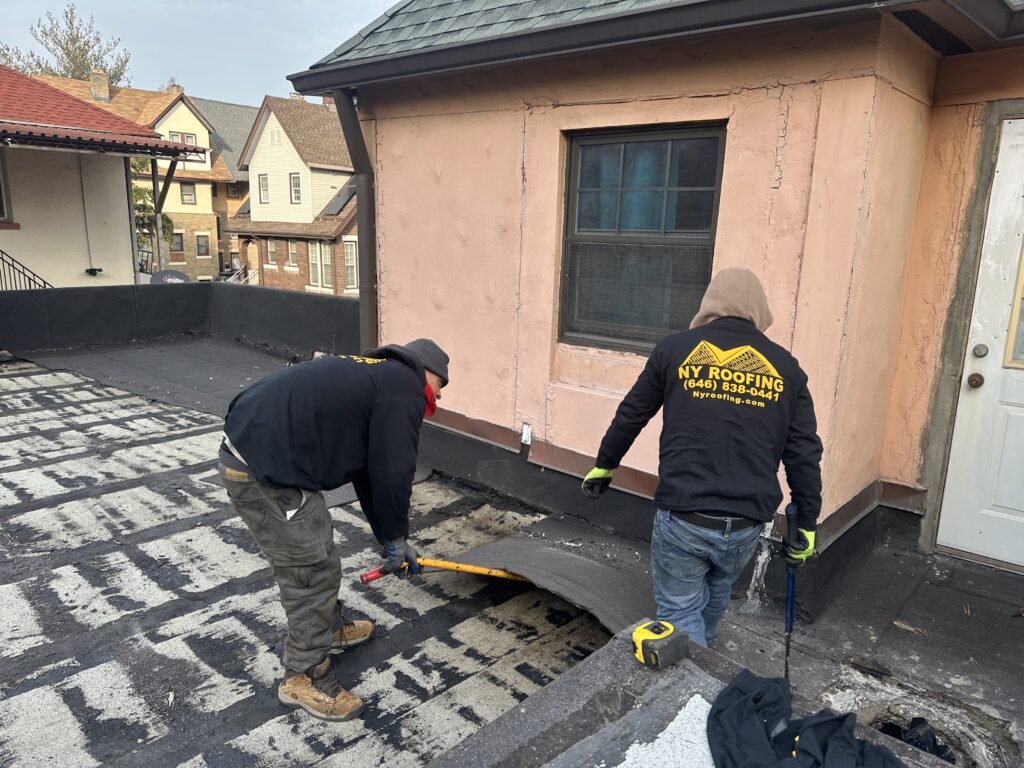
Two workers wearing hoodies and NY ROOFING jackets are removing old roofing material from a flat rooftop. One uses a shovel while the other lifts the material. Residential houses are visible in the background.

Modified Bitumen vs EPDM for Brooklyn Buildings

Flat roofs are a defining feature of many Brooklyn buildings. From brownstones to mixed use properties, these structures depend on reliable roofing systems that can handle changing weather and long term wear. When it comes to flat roofing, two materials are often considered. Modified bitumen and EPDM. Both are widely used across Brooklyn, and each has its own strengths. Choosing between them is not always simple. The right option depends on your building, your budget, and how you plan to maintain the roof over time. This guide explains the key differences in a practical way so you can make a confident decision. Understanding Modified Bitumen Roofing Modified bitumen is an asphalt based roofing system designed for flat and low slope roofs. It is typically installed in layers, which adds strength and durability. This material has been used for decades and is known for its ability to handle foot traffic. That makes it a good choice for buildings where the roof is accessed for maintenance or equipment. In Brooklyn, modified bitumen is often seen on older buildings that require a strong and flexible solution. It performs well in different weather conditions and provides solid protection against water. Understanding EPDM Roofing EPDM is a synthetic rubber roofing membrane. It is usually installed in large sheets, which reduces the number of seams on the roof. Fewer seams mean fewer chances for leaks. This is one of the main reasons why EPDM is popular for flat roofs. EPDM is also known for its flexibility. It can expand and contract with temperature changes without cracking. In a city like Brooklyn, where seasons vary significantly, this can be a major advantage. Durability and Lifespan Both materials are durable, but they perform differently over time. Modified bitumen is strong and resistant to physical damage. It can handle foot traffic better than many other roofing materials. With proper maintenance, it can last around 15 to 25 years. EPDM tends to last longer. A well installed EPDM roof can reach 25 to 30 years or more. Its resistance to UV exposure helps it maintain performance over time. If longevity is your main concern, EPDM often has an edge. If durability under heavy use is more important, modified bitumen may be the better fit. Installation Process and Complexity Installation plays a key role in the performance of any roof. Modified bitumen is usually installed using heat or adhesive. This process requires skilled professionals and careful handling. The layered structure adds strength, but it also increases installation time. EPDM installation is generally faster. Large sheets are rolled out and sealed, which reduces labor time. However, proper sealing is critical to avoid leaks. In Brooklyn, where access to rooftops can be limited, faster installation can sometimes reduce overall project cost. Cost Comparison Cost is often one of the biggest deciding factors for homeowners and property managers. Modified bitumen is typically more affordable upfront. The materials and installation costs are lower compared to EPDM. EPDM may have a higher initial cost, but it often provides better long term value due to its lifespan and lower maintenance needs. When comparing costs, it is important to think beyond the initial investment. A roof that lasts longer and requires fewer repairs can save money over time. Weather Resistance in Brooklyn Brooklyn weather includes hot summers, cold winters, and periods of heavy rain. Modified bitumen performs well in cold weather and offers strong resistance to water. Its layered design helps protect against leaks. EPDM stands out for its flexibility. It handles temperature changes without cracking, which is important during seasonal shifts. Both materials can perform well in Brooklyn conditions when installed correctly. The choice depends on which features matter more for your building. Maintenance Requirements Maintenance is an important part of any roofing system. Modified bitumen may require more frequent inspections, especially if the roof is exposed to foot traffic. Small issues should be repaired early to prevent damage. EPDM generally requires less maintenance. Its smooth surface and fewer seams reduce the chances of leaks. Regular inspections are still necessary for both systems. Keeping the roof clean and addressing minor issues early can extend its lifespan. Which Option Is Better for Brooklyn Buildings There is no one size fits all answer. The right choice depends on your specific needs. If your building has heavy rooftop activity or requires a tougher surface, modified bitumen may be a better option. If you are looking for a longer lasting solution with lower maintenance, EPDM could be the right choice. The best approach is to evaluate your building and speak with a roofing professional who understands Brooklyn properties. If you need help deciding, you can call (646) 838-0441 to discuss your options and get expert guidance based on your roof condition. Conclusion Choosing between modified bitumen and EPDM comes down to your priorities. Both materials are proven options for flat roofs in Brooklyn buildings. Modified bitumen offers strength and durability. EPDM provides flexibility and long term performance. Understanding these differences helps you make a decision that fits your property and budget. If you are planning a roof replacement or want expert advice on the best material for your building, now is the right time to take the next step. Speak with a professional, explore your options, and move forward with confidence. Call NY Roofing at (646) 838-0441 today to get started. Frequently Asked Questions About Modified Bitumen and EPDM Roofing What is the main difference between modified bitumen and EPDM? Modified bitumen is an asphalt based layered system, while EPDM is a synthetic rubber membrane installed in large sheets with fewer seams. Which roofing material lasts longer, EPDM or modified bitumen? EPDM generally lasts longer, often up to 30 years, while modified bitumen typically lasts between 15 to 25 years with proper maintenance. Is EPDM better for Brooklyn weather? EPDM performs well in Brooklyn due to its flexibility and resistance to temperature changes, but both materials can work effectively when installed correctly. Which option is more affordable? Modified bitumen usually

Modified Bitumen vs EPDM for Brooklyn Buildings Read More »

How Gutters Protect Your Roof in Brooklyn Homes

Gutters are often overlooked, but they play a critical role in protecting your home. In Brooklyn, where buildings are close together and weather conditions can shift quickly, a reliable gutter system is essential. Many homeowners focus on roofing materials and repairs, but without proper drainage, even the best roof can fail early. Gutters help control how water moves off your roof and away from your home. When they work properly, they prevent damage that could otherwise lead to costly repairs. Understanding how gutters protect your roof can help you maintain your property and avoid common issues that affect Brooklyn homes. Why Gutters Matter for Flat and Low Slope Roofs Brooklyn townhouses often have flat or low-slope roofs. These designs make drainage more challenging compared to pitched roofs. Without gutters, rainwater and melting snow would collect on the roof surface. Over time, this standing water can weaken roofing materials and increase the risk of leaks. Gutters provide a clear path for water to flow away from the roof. They reduce the chances of ponding and help maintain the structural integrity of the building. In a city like Brooklyn, where heavy rain and snow are common, this function becomes even more important. Preventing Water Damage to Roofing Materials Water is one of the biggest threats to any roof. When it is not directed properly, it begins to break down materials. Gutters help by collecting rainwater and guiding it through downspouts. This prevents water from spreading across the roof surface. When gutters are missing or clogged, water can seep into seams and joints. Over time, this leads to cracks, leaks, and internal damage. Keeping gutters clean and functional helps extend the life of your roofing system. Protecting Roof Edges and Flashing Roof edges and flashing are some of the most vulnerable parts of a roofing system. These areas are designed to seal gaps and prevent water from entering. If water is not controlled, it can overflow and reach these critical points. This increases the chances of leaks and structural issues. Gutters reduce this risk by managing water flow. They ensure that water moves away from edges instead of pooling around them. In Brooklyn homes, where buildings are often attached or closely spaced, protecting these areas is essential. Reducing the Risk of Foundation Problems While gutters primarily protect the roof, their role extends beyond that. They also help protect the foundation of your home. When water falls directly from the roof without gutters, it collects around the base of the building. Over time, this can weaken the foundation and cause cracks. Gutters direct water away from the structure, reducing pressure on the foundation. This is especially important in older Brooklyn properties where foundations may already be under stress. Preventing Mold and Interior Damage Moisture problems do not stay outside. When water enters your roofing system, it can spread into walls and ceilings. This creates the perfect environment for mold growth. It can also damage insulation and increase energy costs. Gutters help prevent this by keeping water out of places where it does not belong. A properly maintained system reduces the risk of hidden moisture issues inside your home. Avoiding Ice Dams During Winter Brooklyn winters can be harsh, and ice dams are a common problem. These form when melting snow refreezes at the edge of the roof. When gutters are clogged or not functioning properly, water cannot drain. It freezes and creates a barrier that traps more water behind it. This trapped water can seep under roofing materials and cause leaks. Clean and well maintained gutters allow melting snow to drain properly, reducing the chances of ice dams forming. Common Gutter Problems in Brooklyn Homes Even though gutters are essential, they can develop problems over time. Clogging is one of the most common issues. Leaves, debris, and dirt can block water flow. This leads to overflow and water damage. Sagging gutters are another concern. When gutters are not securely attached, they lose their ability to direct water properly. Leaks and cracks can also develop, especially in older systems. These allow water to escape before it reaches the downspout. Regular inspection and maintenance can prevent these issues from becoming serious. How to Maintain Your Gutters Proper maintenance is key to keeping your gutter system effective. Cleaning gutters regularly helps prevent blockages. This is especially important during fall and after storms. Checking for signs of damage, such as cracks or loose sections, can help you catch problems early. Ensuring that downspouts direct water away from your home is also important. If you are unsure about the condition of your gutters, speaking with a professional can help. You can also call (646) 838-0441 to get guidance or schedule an inspection for your Brooklyn home. When to Repair or Replace Your Gutters Not all gutter problems require replacement. In many cases, repairs are enough to restore function. However, if your gutters are old, heavily damaged, or constantly clogging, replacement may be the better option. Modern gutter systems are designed to handle heavy rainfall more efficiently. They also require less maintenance compared to older systems. A professional assessment can help you decide the best approach. Conclusion Gutters may seem like a small part of your home, but they play a major role in protecting your roof and overall structure. In Brooklyn, where weather conditions can be demanding, having a reliable gutter system is essential. From preventing water damage to reducing the risk of leaks and foundation issues, gutters support the long term health of your home. Ignoring gutter maintenance can lead to problems that are expensive to fix. Staying proactive helps you avoid these issues and keeps your home in good condition. If your gutters are clogged, damaged, or not performing as they should, now is the right time to take action. A simple inspection can make a big difference. For expert advice or to schedule a service, call NY Roofing at (646) 838-0441 and protect your Brooklyn home with confidence. Frequently Asked Questions About Gutters in Brooklyn

How Gutters Protect Your Roof in Brooklyn Homes Read More »

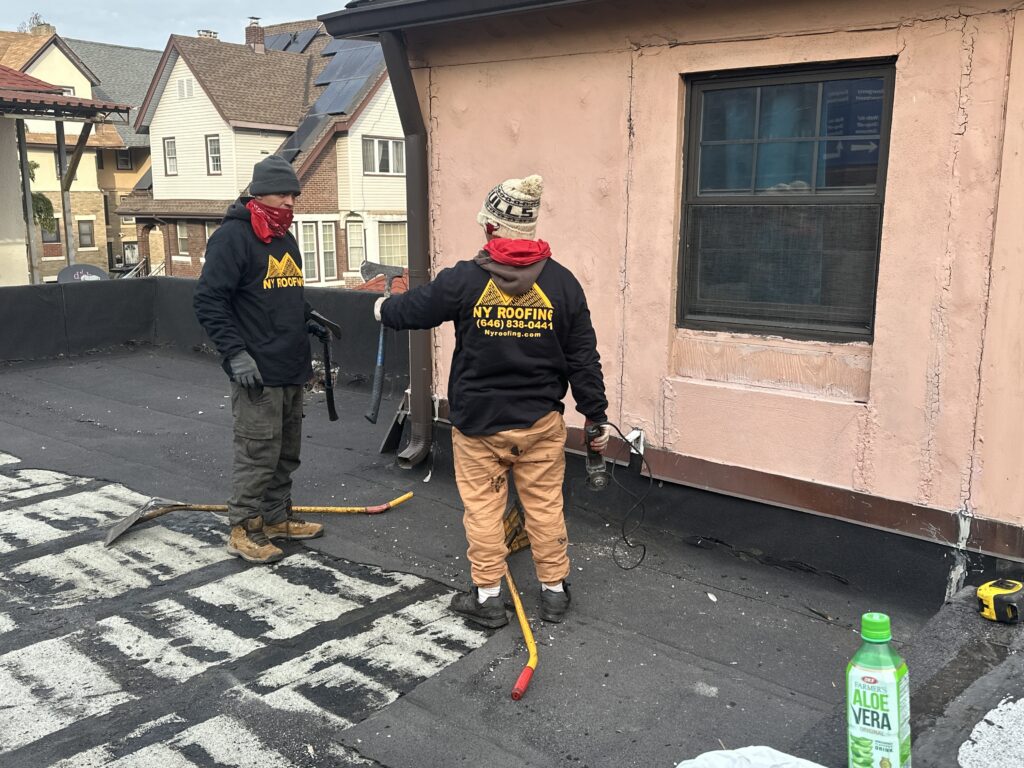
Two workers in black NY Roofing hoodies stand on a flat rooftop. One is holding a tool, while the other is facing a pink wall. Tools and a bottle of aloe vera drink are visible in the foreground. Houses are in the background.

Common Flat Roof Problems in Brooklyn Townhouses

Flat roofs are a familiar sight across Brooklyn townhouses. They offer a practical design and make better use of space, especially in dense urban areas. Many homeowners even use them for seating or utility setups. But while flat roofs are functional, they are not without challenges. Unlike sloped roofs, flat surfaces do not allow water to run off easily. This makes them more dependent on proper installation and regular maintenance. Over time, even small issues can grow into serious problems if they are not addressed early. If you own a townhouse in Brooklyn, understanding these common flat roof problems can help you avoid unexpected repairs and protect your investment. Ponding Water and Drainage Issues One of the most common concerns with flat roofs is standing water. After rain or snow, water tends to collect instead of draining away quickly. If this water remains for more than a day or two, it begins to affect the roofing material. Ponding water weakens the surface and increases the chances of leaks. It also adds extra weight to the structure. In older Brooklyn homes, drainage systems are often not designed for current weather conditions, which makes the problem worse. Regular inspection of drains and ensuring proper slope can help prevent this issue. Even a slight improvement in drainage can make a noticeable difference. Roof Leaks and Hidden Moisture Leaks are one of the most frustrating problems for homeowners. What makes flat roof leaks difficult is that they are not always easy to trace. Water can travel beneath the surface before it becomes visible inside the house. By the time you notice a stain on your ceiling, the damage may already be significant. Common causes include worn-out materials, damaged seams, and poor sealing around roof fixtures. Brooklyn townhouses often have older roofing systems, which makes them more prone to such issues. Routine inspections can help detect weak areas before they turn into major repairs. Membrane Wear and Surface Cracks The roofing membrane is the main layer that protects your home from water. Over time, it starts to wear out due to constant exposure to sunlight and changing weather. In Brooklyn, winters can be harsh and summers can be hot. This continuous shift in temperature causes the material to expand and contract. As a result, cracks and small splits begin to appear. Even minor cracks should not be ignored. They allow moisture to enter and slowly damage the structure underneath. Timely repair can prevent larger problems later. Flashing Problems Around Roof Edges Flashing is installed around edges, vents, and chimneys to block water from entering weak points. It plays a critical role in keeping the roof sealed. With time, flashing can loosen or develop gaps. Temperature changes often cause materials to shift, which leads to small openings. Once that happens, water finds its way inside. In Brooklyn’s climate, this problem is quite common. Checking flashing during seasonal inspections can help maintain a strong seal. Blistering and Surface Bubbling Blisters appear as raised spots on the roof surface. They form when air or moisture gets trapped under the membrane. At first, they may not seem serious. But as they grow, they weaken the material. If a blister breaks open, it exposes the inner layers to water. This issue is often linked to installation quality or trapped moisture during the roofing process. Addressing it early helps maintain the integrity of the roof. Thermal Movement and Material Stress Flat roofs constantly react to temperature changes. During hot weather, materials expand. In cold weather, they contract. This repeated cycle creates stress on the structure. Over time, seams may separate and edges may start to curl. This makes the roof more vulnerable to leaks. Brooklyn experiences wide temperature variations throughout the year. Using flexible and durable materials can reduce the impact of this movement. Clogged Drains and Debris Build Up Drainage systems are essential for flat roofs. When they are blocked, water has nowhere to go. Leaves, dirt, and debris often collect on rooftops. In areas with nearby buildings and trees, this happens more frequently. If drains are not cleaned regularly, water starts to pool. Keeping drains clear is a simple step, but it plays a big role in preventing damage. Aging Roof Systems Many Brooklyn townhouses are older structures. Their roofs may have gone through years of wear without major upgrades. As materials age, they lose their strength and flexibility. This makes them more prone to cracks and leaks. In some cases, the roof may begin to sag slightly due to long-term stress. If your roof is nearing the end of its lifespan, repeated repairs may not be enough. A replacement could be a better long-term solution. Lack of Routine Maintenance One of the biggest reasons flat roof problems become serious is lack of maintenance. Many homeowners only take action when visible damage appears. Flat roofs require regular care to stay in good condition. Small issues can be fixed easily if they are found early. Ignoring them allows damage to spread. Seasonal inspections and timely repairs can extend the life of your roof and reduce overall costs. Conclusion Flat roofs are practical for Brooklyn townhouses, but they require attention and care. From ponding water to aging materials, each issue has the potential to cause serious damage if left unchecked. The good news is that most of these problems can be managed with regular inspections and timely repairs. Staying proactive helps you avoid expensive fixes and keeps your home protected. If you have noticed signs of wear on your flat roof or simply want peace of mind, now is the right time to act. Schedule a professional inspection with NY Roofing at (646) 838-0441 and make sure your Brooklyn townhouse stays protected through every season. FAQs What is the most common flat roof problem in Brooklyn townhouses? Ponding water is the most common issue. It happens when water does not drain properly and stays on the roof surface, which can lead to damage over time. How long does a flat

Common Flat Roof Problems in Brooklyn Townhouses Read More »

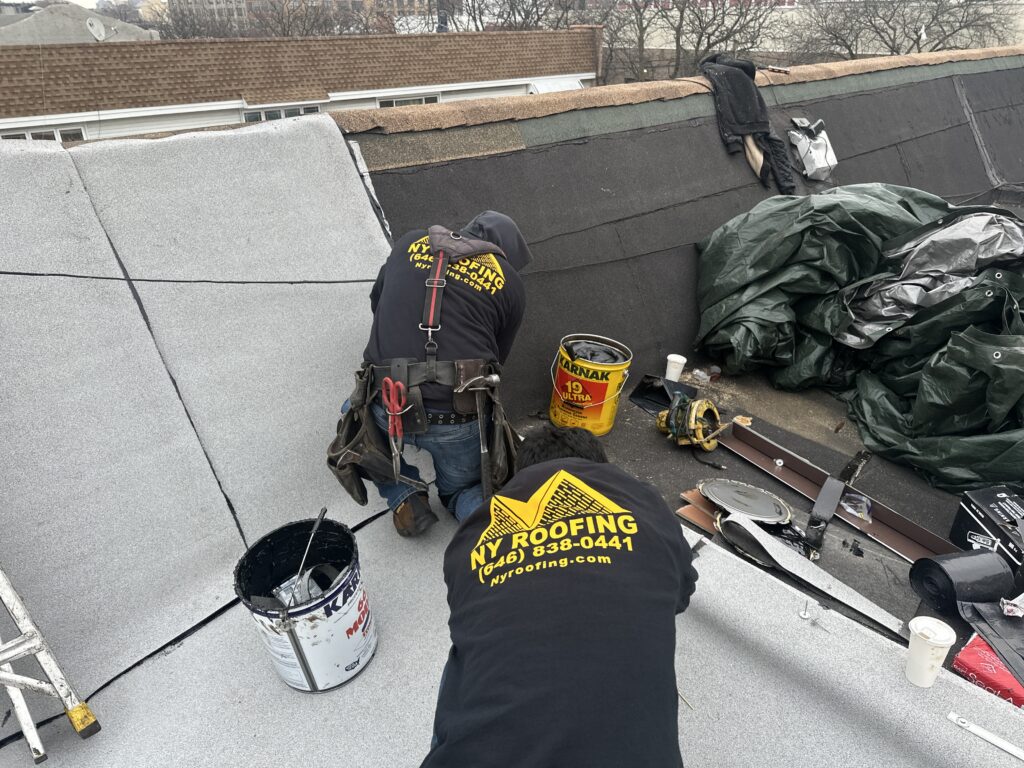
Two workers in NY Roofing shirts and safety gear are installing roofing material on a flat roof. Tools, a can of Karnak, a white bucket, and other supplies are scattered nearby. Houses and trees are visible in the background.

How Brooklyn Weather Impacts Different Roofing Systems

Brooklyn’s weather can be unpredictable, with hot summers, cold winters, heavy rain, and occasional storms all playing a role in how roofing systems perform. For homeowners and property managers, understanding how these weather conditions affect different types of roofs is essential for maintaining long-term durability and preventing costly damage. From flat roofing systems commonly found on brownstones and apartment buildings to asphalt shingles used on residential homes, each roofing material responds differently to environmental stress. The combination of temperature fluctuations, moisture exposure, and urban conditions creates unique challenges that require careful planning and maintenance. By understanding how Brooklyn weather impacts roofing systems, property owners can make better decisions about materials, repairs, and long-term care. The Role of Weather in Roof Performance Roofing systems are designed to protect buildings from external elements, but constant exposure to weather can gradually wear them down. In Brooklyn, roofs must handle a combination of heat, moisture, wind, and seasonal changes. Temperature fluctuations can cause materials to expand and contract, leading to cracks or weakened seams over time. Moisture from rain and snow can penetrate small gaps, causing leaks and structural issues. Wind can loosen materials and expose vulnerable areas. These factors make it essential to choose roofing systems that are suited to Brooklyn’s climate and to maintain them regularly. Impact of Rain on Roofing Systems Rain is one of the most consistent challenges for roofing systems in Brooklyn. While all roofs are designed to handle water, the effectiveness of drainage and waterproofing determines how well they perform. Flat roofs, which are common in Brooklyn, are particularly vulnerable to water-related issues. Without proper drainage, water can accumulate on the surface, leading to pooling. Over time, this can weaken the roofing membrane and increase the risk of leaks. Sloped roofs, such as those with asphalt shingles, allow water to run off more easily. However, damaged or missing shingles can still allow water to penetrate the roof structure. Proper installation and maintenance play a critical role in ensuring that roofing systems can handle heavy rainfall without developing problems. How Snow and Ice Affect Roofs Winter weather in Brooklyn introduces additional challenges for roofing systems. Snow accumulation can add weight to the roof, while melting and refreezing can create ice-related issues. Flat roofs may experience water buildup when snow melts, especially if drainage systems are not functioning properly. This can lead to leaks and structural stress. On sloped roofs, ice dams can form along the edges, preventing water from draining effectively. This trapped water can seep under shingles and cause damage. Roofing materials must be able to withstand these conditions without losing their integrity. Proper insulation and ventilation also play a role in minimizing winter-related issues. Effects of Heat and UV Exposure During the summer months, Brooklyn experiences high temperatures and strong sunlight, which can impact roofing materials in different ways. Flat roofing systems made from materials such as EPDM or TPO are designed to handle UV exposure, but prolonged heat can still cause wear over time. TPO, with its reflective surface, helps reduce heat absorption and improve energy efficiency. Asphalt shingles can also be affected by heat, as prolonged exposure may cause them to deteriorate or lose granules. This can reduce their ability to protect the roof effectively. Heat-related expansion can also impact roofing systems, especially when combined with cooler nighttime temperatures. This repeated expansion and contraction can weaken materials over time. Wind and Storm Damage Brooklyn occasionally experiences strong winds and storms that can affect roofing systems. High winds can loosen or remove roofing materials, exposing the underlying structure to water and debris. Flat roofs are generally less affected by wind uplift compared to sloped roofs, but they are still vulnerable at edges and seams. Proper installation and secure fastening are essential for minimizing wind damage. Shingle roofs may experience lifted or missing shingles after storms, which can create entry points for water. Regular inspections after storms help identify damage early and prevent further issues. How Different Roofing Materials Perform in Brooklyn Weather Different roofing materials respond to Brooklyn’s weather conditions in unique ways, making it important to choose the right option for your property. EPDM roofing is known for its flexibility, allowing it to handle temperature changes without cracking. This makes it a reliable choice for flat roofs exposed to varying weather conditions. TPO roofing offers strong waterproofing and energy efficiency, making it suitable for properties looking to reduce heat absorption. Modified bitumen provides durability and resistance to heavy usage, making it a practical option for buildings with rooftop activity. Asphalt shingles perform well on sloped roofs, offering effective water shedding and protection when properly maintained. Each material has its strengths, and selecting the right one depends on the building type and environmental exposure. Importance of Regular Maintenance Weather-related wear is inevitable, but regular maintenance can help extend the lifespan of roofing systems. Inspections allow property owners to identify issues such as cracks, leaks, or drainage problems before they become serious. Cleaning gutters and ensuring proper drainage helps prevent water buildup, especially on flat roofs. Addressing minor repairs promptly reduces the risk of larger problems. Maintenance is particularly important in Brooklyn, where roofs are exposed to a combination of environmental and urban factors. Choosing the Right Roofing System for Brooklyn Properties Selecting the right roofing system involves considering both the structure of the building and the local climate. Flat roofs require materials that provide strong waterproofing and flexibility, while sloped roofs benefit from materials that shed water effectively. Working with experienced roofing professionals ensures that the chosen system is suitable for Brooklyn conditions and installed correctly. A well-chosen roofing system not only improves performance but also reduces long-term maintenance and repair costs. Conclusion Brooklyn weather plays a significant role in how roofing systems perform over time. From heavy rain and snow to heat and wind, each condition presents challenges that can impact the durability of roofing materials. Understanding these effects allows property owners to make informed decisions about material selection, maintenance, and repairs. By choosing

How Brooklyn Weather Impacts Different Roofing Systems Read More »

A construction worker in safety gear kneels on a rooftop, repairing gutter-related roof damage NYC, with roofing materials and a ladder nearby. He holds a hammer while facing a city street lined with buildings and trees under an overcast sky.

Roof Leak Repair in Brooklyn: Common Causes & Permanent Solutions

Roof leaks are one of the most common and frustrating problems Brooklyn property owners face. From historic brownstones and townhouses to multi-family buildings and commercial properties, aging infrastructure combined with harsh New York weather makes roof leaks a recurring issue across the borough. What starts as a small water stain or drip can quickly escalate into serious structural damage if not addressed properly. Roof leak repair in Brooklyn requires more than a temporary fix it demands a deep understanding of local building types, weather patterns, and roofing systems to deliver permanent solutions. This guide explains why roof leaks are so common in Brooklyn, what causes them, how professionals diagnose the problem, and what long-term repair solutions actually work. Why Roof Leaks Are So Common in Brooklyn Brooklyn’s building landscape is unique. Many structures are decades old and were built using materials and designs that weren’t intended to handle modern weather extremes. Flat roofs dominate much of the borough, particularly on residential and mixed-use buildings, making proper drainage essential. Brooklyn also experiences heavy rainfall, snow accumulation, and freeze–thaw cycles that stress roofing systems year after year. Even well-maintained roofs eventually develop weak points where water can penetrate. In dense neighborhoods, shared walls and limited roof access further complicate repairs, allowing minor leaks to spread unnoticed until damage becomes severe. Common Causes of Roof Leaks in Brooklyn Buildings Roof leaks rarely come from a single obvious source. Instead, they are usually the result of gradual deterioration combined with environmental stress. Aging roofing materials are one of the most common causes. Over time, membranes crack, shingles loosen, and flashing corrodes. Once materials lose their integrity, water finds its way beneath the surface. Poor drainage is another major contributor. Flat roofs rely on properly functioning drains and gutters to move water away. When drains clog or slope is inadequate, water pools on the roof, increasing the likelihood of leaks. Flashing failures around chimneys, vents, skylights, and roof edges are also common. Flashing is designed to seal vulnerable areas, but improper installation or aging materials often lead to leaks. In winter, ice dams form when melting snow refreezes near roof edges. This forces water back under roofing layers, causing hidden leaks that may not appear until weeks later. Residential Roof Leaks in Brooklyn Homes Brooklyn homes, especially older townhouses and brownstones, are particularly vulnerable to roof leaks. Many still have original roofing systems or outdated repairs that no longer meet modern standards. Residential leaks often appear as ceiling stains, peeling paint, or damp attic spaces. These symptoms may seem minor, but they usually indicate deeper issues within the roof structure. Temporary patching may stop visible water intrusion, but without addressing the root cause, leaks almost always return. Commercial Roof Leaks in Brooklyn Properties Commercial buildings in Brooklyn often feature large flat roofs that support HVAC units, signage, and foot traffic. These roofs experience constant wear and tear, making leak prevention a critical maintenance concern. Roof leaks in commercial properties can disrupt operations, damage inventory, and create safety hazards for tenants and employees. In many cases, leaks originate from drainage issues, membrane punctures, or neglected maintenance. Professional roof leak repair in Brooklyn is essential for minimizing downtime and protecting long-term building value. How Professionals Diagnose Roof Leaks One of the biggest challenges with roof leaks is that water rarely enters where it appears inside the building. Water travels along beams, insulation, and surfaces before becoming visible. Professional roofing contractors begin with a thorough inspection of the roof surface, drainage systems, flashing, and penetrations. They look for signs of moisture intrusion, membrane damage, and structural weakness. In many cases, advanced diagnostic methods are used to trace leaks accurately. This ensures repairs address the true source of the problem rather than just the symptoms. Permanent Solutions for Roof Leak Repair in Brooklyn Permanent roof leak repair focuses on correcting underlying issues, not just sealing visible damage. This may involve replacing damaged sections of roofing material, repairing or upgrading flashing, improving drainage, or reinforcing roof structure. For flat roofs, restoring proper slope and ensuring drains are clear is often critical. In some cases, installing additional drainage solutions prevents future water buildup. On aging roofs, partial or full replacement may be the most cost-effective long-term solution. While repairs can extend roof life, there comes a point where replacement offers better protection and value. The Risks of Delaying Roof Leak Repairs Delaying roof leak repair allows moisture to spread throughout the building. Insulation becomes saturated, mold growth accelerates, and structural components weaken. In Brooklyn’s tightly packed neighborhoods, leaks can affect neighboring properties, increasing liability risks. Insurance claims may also be denied if damage is traced back to neglect. Prompt professional repair protects both the building and its occupants. Preventing Future Roof Leaks Prevention starts with regular inspections and proactive maintenance. Identifying small issues early prevents costly repairs later. Brooklyn property owners benefit greatly from scheduled roof evaluations, especially after storms or seasonal changes. Proper drainage maintenance and timely repairs extend roof lifespan significantly. If you want to know more about NY Roofing or need expert guidance for your residential or commercial roofing project in NYC, give us a call at (646) 838-0441. Our team will be happy to help you make the right roofing decision. Frequently Asked Questions About Roof Leak Repair in Brooklyn What is the most common cause of roof leaks in Brooklyn? Aging roofing materials, poor drainage, and flashing failures are the most common causes of roof leaks in Brooklyn buildings. Can a roof leak be permanently fixed? Yes, roof leaks can be permanently fixed when the root cause is properly identified and repaired using appropriate materials and techniques. How quickly should roof leaks be repaired? Roof leaks should be addressed as soon as they are discovered to prevent structural damage, mold growth, and increased repair costs. Are roof leaks covered by insurance? Coverage depends on the insurance policy and the cause of the leak. Sudden storm damage is often covered, while neglect-related damage may not be.

Roof Leak Repair in Brooklyn: Common Causes & Permanent Solutions Read More »